Indian accountants, bookkeepers and small business owners closing a period from a trial balance, in Tally or anywhere else.
How it works
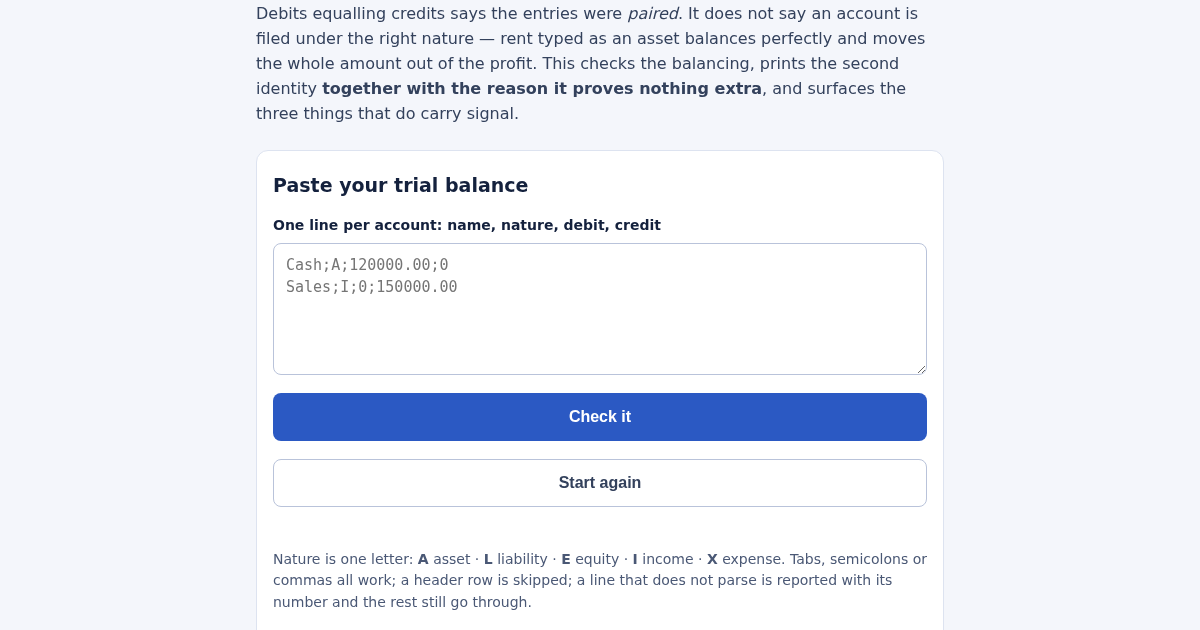
- Paste one line per account: name, nature (A, L, E, I or X), debit, credit.
- Check the balancing first — until the difference is nil, nothing below is worth reading.
- Read the identity, and read the note next to it: it restates the balancing rather than confirming it.
- Work through the lines flagged for a second look: reversed sides, suspense accounts, and lines carrying both a debit and a credit.
What you gain
- Checks your trial balance and tells you plainly what a balanced total does and doesn't prove — then flags the three specific problems balancing alone can't catch, like an account sitting on the wrong side.
Screenshot
Technical details
How to set up & use
- Buy the license — your key (lic_...) appears on the order page and in your email.
- Sign in at app.synoriaai.com with your license key.
- No installation — the product runs in your browser, on your own isolated instance.
- 1. Paste your trial balance into the text box — one line per account, with columns for name, nature (A/L/E/I/X), debit, and credit, separated by tabs, semicolons, or commas.
- 2. Click the 'Check Balance' button. The page will show the total debit and credit amounts, and whether they match.
- 3. If the columns balance, the page will display the identity 'assets - liabilities - equity = income - expenses' and explain that this is not a second check — it holds automatically.
- 4. Review the flagged items: accounts on the wrong side, suspense accounts, or lines with both debit and credit — these are the real signals to investigate.
- 5. If any line fails to parse, the page will report its line number while still processing the rest — fix that line and re-paste if needed.
Frequently asked questions
What does this tool actually prove about my trial balance?
It proves only that the debit and credit entries are paired — nothing more. It does not verify that accounts are classified correctly or that transactions are complete.
Is my data safe if I paste it here?
All processing happens in your browser — nothing is sent to a server. You can disconnect from the internet and it still works.
Does it guess account types from names?
No. You must specify the nature (A/L/E/I/X) for each line. The tool deliberately avoids guessing, because that would introduce the very judgement it refuses to fake.
Related products
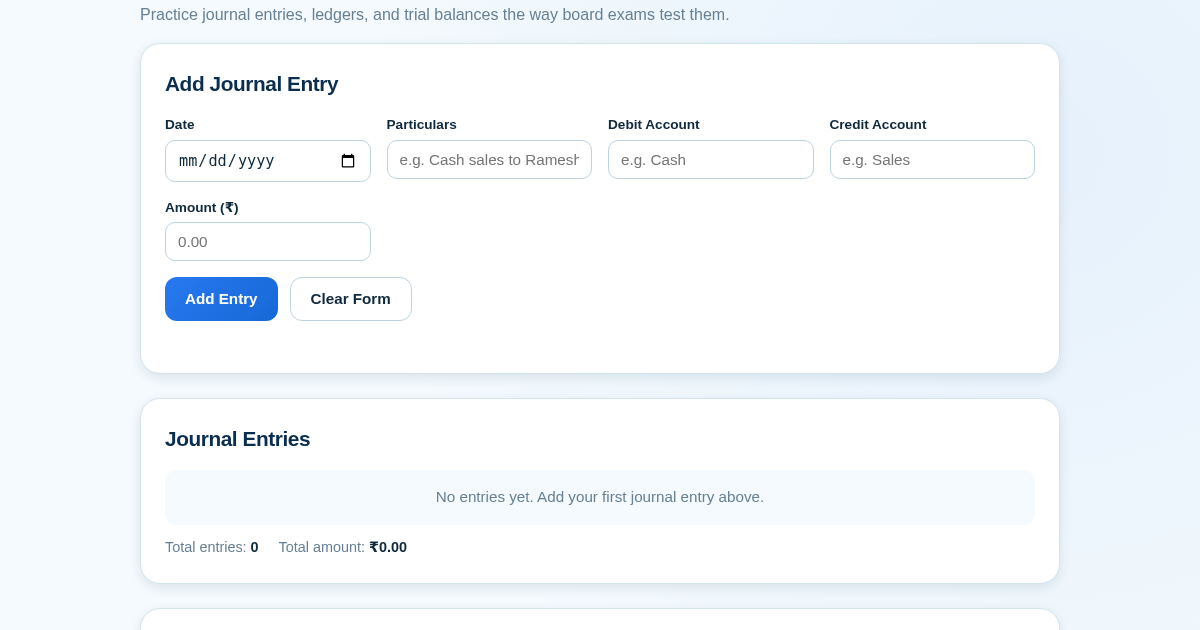
Ledger & Trial Balance Practice Tool
Commerce students in Class 10-12 need to practice journal entries and see how they flow into ledgers, trial balances, and balance sheets for board exams. This tool lets them enter transactions and instantly see the…
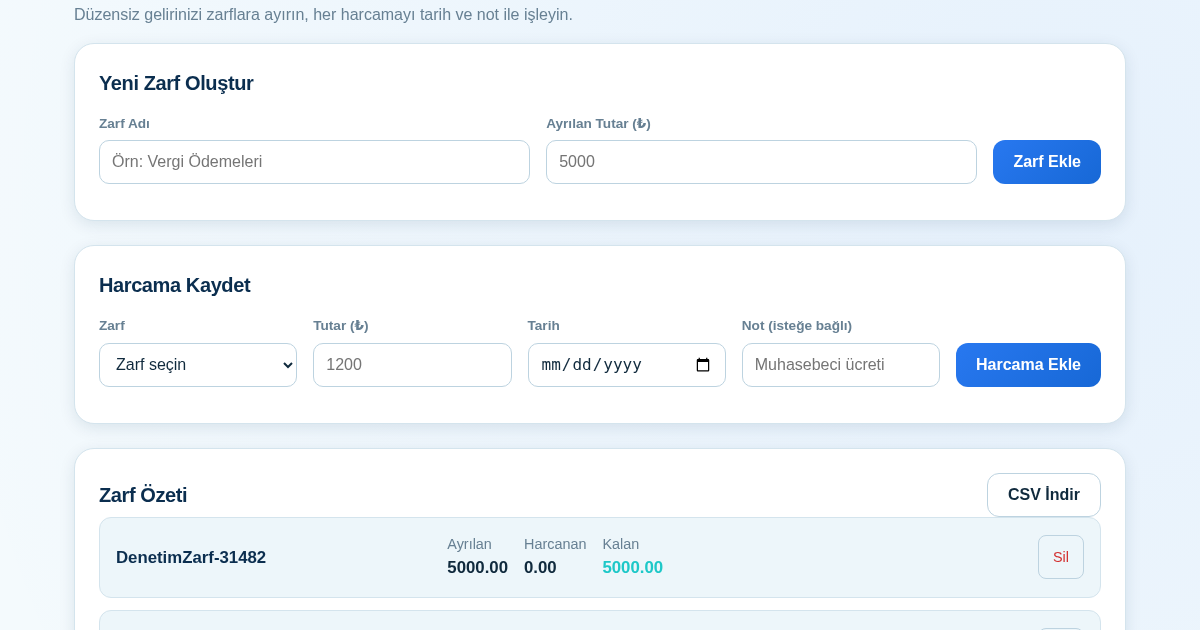
KASA - Serbest Çalışanlar İçin Zarf Bütçesi
Serbest çalışanlar düzensiz gelirlerini vergi, kira ve yaşam giderleri gibi zarflara bölerek bütçelerini düzenli tutabilir. Her harcamayı tarih ve not ile ilgili zarfa işleyerek ne kadar ayırdığını ve ne kadar…
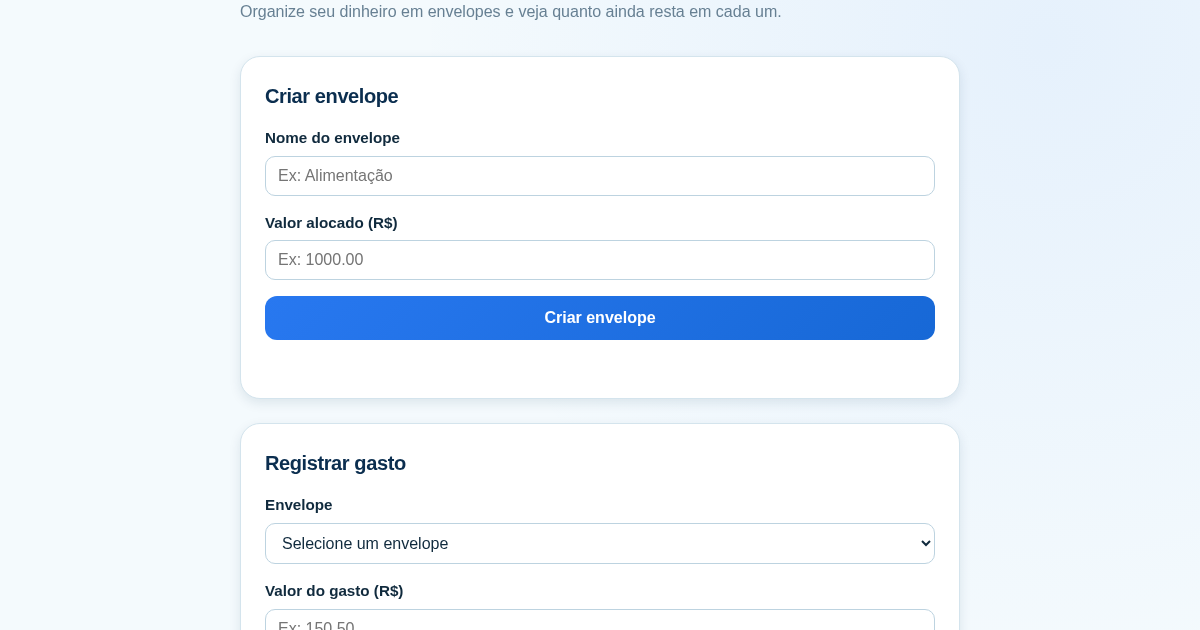
Calculadora de Orçamento por Envelopes (Pix)
Este aplicativo ajuda brasileiros a organizar seu dinheiro em envelopes de orçamento, como alimentação, transporte e lazer, sem precisar conectar uma conta bancária. Ele resolve o problema de controlar gastos do dia a…
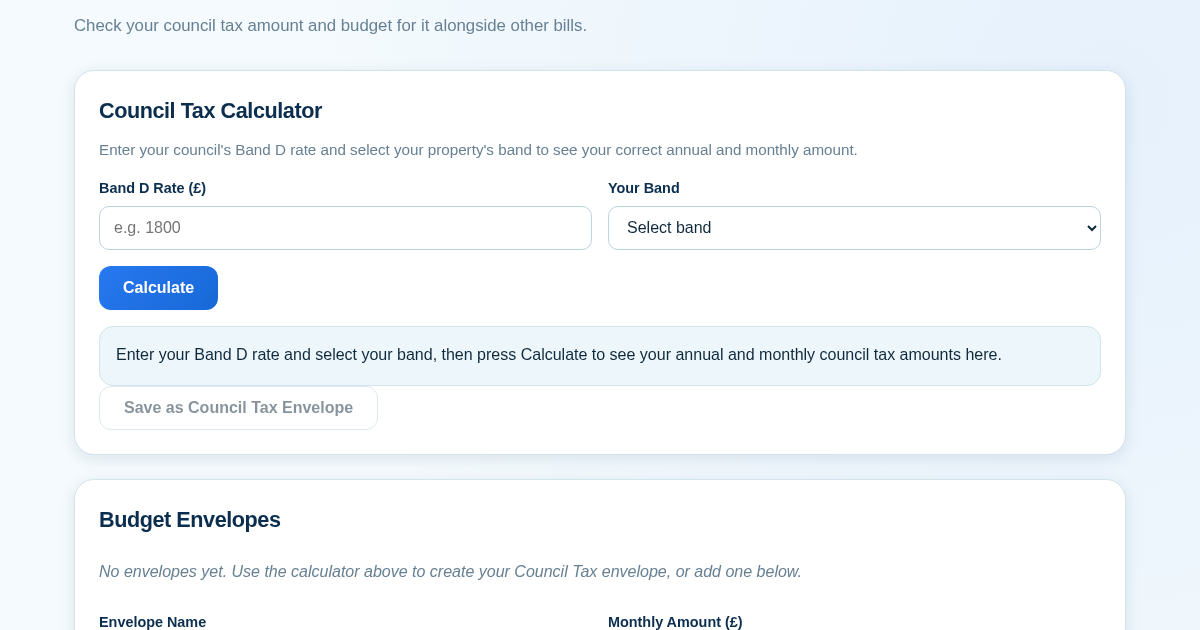
Council Tax Envelope Budget
This app helps UK residents verify they are paying the correct council tax amount for their property band by calculating it from their council's published Band D rate. It then provides a simple envelope-based budgeting…